Digital orthodontic workflows have evolved rapidly over the past several years. Between intraoral scanning, cloud-based treatment planning, and in-office 3D printing, many practices are now producing retainers faster and more efficiently than ever before.
But even with these advancements, one major bottleneck still exists in many offices:
manual model preparation.
As orthodontic practices continue increasing their digital production capabilities, repetitive CAD tasks like model cleanup, blockout, and print preparation can consume valuable team time — especially in high-volume retainer workflows.
That’s where AI-powered workflow automation is beginning to make a major impact.
Through Voxel AI Lab, powered by a partnership between Voxel Dental and Relu AI, orthodontic practices can now automate retainer-ready model generation in approximately 60 seconds.
The result:
faster workflows, fewer repetitive digital tasks, and more efficient in-office production.
The Growing Demand for In-House Retainer Production
More orthodontic practices are bringing retainer production in-house for several reasons:
- faster turnaround times,
- improved patient experience,
- reduced outsourcing costs,
- and greater production control.
With modern intraoral scanners and affordable 3D printing systems, practices can now fabricate:
- clear retainers,
- backup retainers,
- replacement retainers,
- and post-treatment appliances internally.
However, the production process still requires preparation work before printing can begin.
Traditionally, teams often need to:
- clean scans,
- prepare model bases,
- add blockout,
- remove undercuts,
- and export printable files.
Individually, these tasks may seem small — but across dozens of cases per week, the time adds up quickly.
Automating the Repetitive Part of the Workflow
Voxel AI Lab is designed to simplify this process.
Instead of manually preparing models, practices can upload an intraoral scan directly into the AI platform and receive a retainer-ready printable model automatically.
The workflow is remarkably simple:
- Capture an intraoral scan
- Upload the scan to Voxel AI Lab
- AI automatically generates the printable model with blockout
- Receive the completed design in about 60 seconds
- Send directly to your 3D printer
For busy orthodontic teams, this can significantly reduce repetitive digital labor while improving production consistency.
Why This Matters for Orthodontic Practices
The biggest advantage of AI-assisted workflows is not replacing people — it’s allowing teams to work more efficiently.
Orthodontic offices today face increasing pressure to:
- manage larger patient volumes,
- deliver appliances faster,
- maintain high-quality digital workflows,
- and operate efficiently despite staffing challenges.
AI-powered model generation helps reduce friction in the production process so clinical and administrative teams can focus more on patient care instead of repetitive CAD tasks.
This becomes especially valuable in practices producing high volumes of:
- retainers,
- aligner models,
- and post-treatment appliances.
Faster Debond and Retainer Delivery Workflows
AI automation can also improve the final stages of orthodontic treatment.
One workflow gaining attention is digital bracket removal.
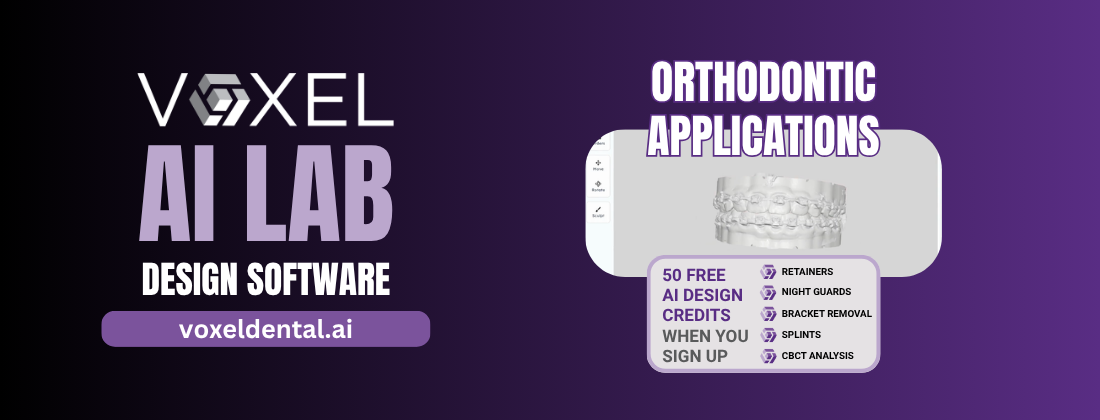
Using pre-debond scans, practices can digitally remove brackets before the patient’s final appointment and prepare retainers ahead of time.
That means:
- shorter debond appointments,
- faster retainer delivery,
- and fewer scheduling bottlenecks.
Instead of waiting until after bracket removal to begin retainer production, practices can proactively prepare retainers before the patient even arrives for their final visit.
AI That Fits Into Existing Digital Workflows
One reason these workflows are gaining traction is because they integrate naturally into technologies many orthodontic practices already use.
Practices with:
- intraoral scanners,
- 3D printers,
- and digital orthodontic workflows
can begin leveraging AI-assisted production without dramatically changing their existing systems.
Rather than adding complexity, the goal is to simplify production and eliminate repetitive steps.
Making Advanced Automation Accessible
Historically, advanced dental design automation was primarily used by large dental labs and enterprise manufacturing centers.
Voxel AI Lab brings those capabilities into private practice through a flexible pay-as-you-go model designed specifically for modern digital dentistry.
Current applications include:
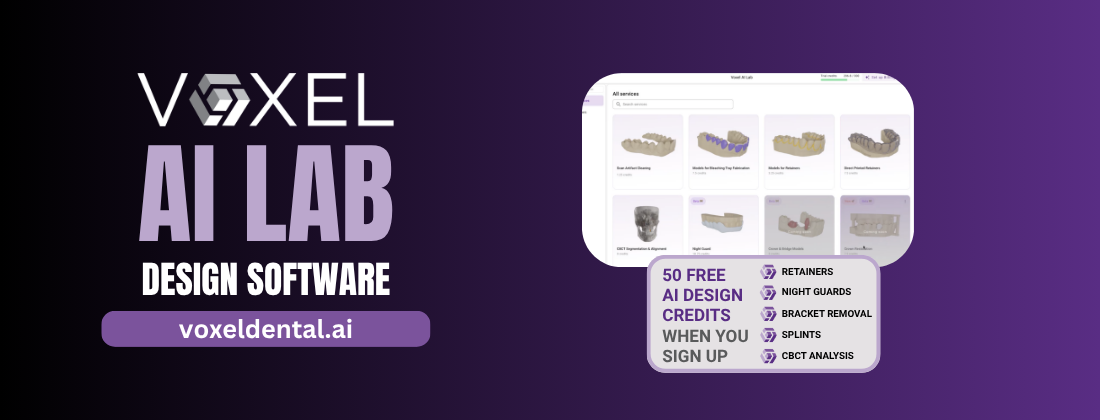
- retainer-ready model generation,
- digital bracket removal,
- bleaching tray workflows,
- printable appliance models,
- and advanced CBCT segmentation services.
For practices interested in exploring AI-powered workflows, Voxel Dental is currently offering:
50 Free AI Design Credits
New users who create an account at:
voxeldental.ai
receive 50 free AI design credits to explore the platform firsthand.
Practices can use those credits toward AI-assisted workflows like:
- retainer-ready model generation,
- digital bracket removal,
- bleaching tray design,
- and additional automated dental design services.
The Future of Orthodontic Workflow Automation
As orthodontics continues moving further into digital production, efficiency is becoming just as important as technology adoption itself.
The next phase of digital orthodontics may not simply be about acquiring scanners or printers — it may be about optimizing the workflows that connect them together.
AI-assisted design automation represents an important step toward:
- faster production,
- more scalable in-house manufacturing,
- and streamlined digital workflows for modern orthodontic practices.
To learn more or activate your free AI design credits, visit:
voxeldental.ai

-1.png?width=45&name=Voxel%20Bios%20(1)-1.png)