If you've been placing Straumann® Bone Level/BLT implants for years, you're probably comfortable with more than just the implant itself. You know the connection, the surgical protocol, the restorative components, and how the system fits into your daily workflow.
But what if you could introduce another implant option without abandoning that familiarity?
That's the idea behind DESS® Conical BLT, an cross-platform compatible dental implant system now available through Voxel Dental.
Let's explore how DESS Conical BLT compares with Straumann Bone Level, what compatibility actually means, and what clinicians should consider before incorporating a new implant system.
What Is DESS Conical BLT?
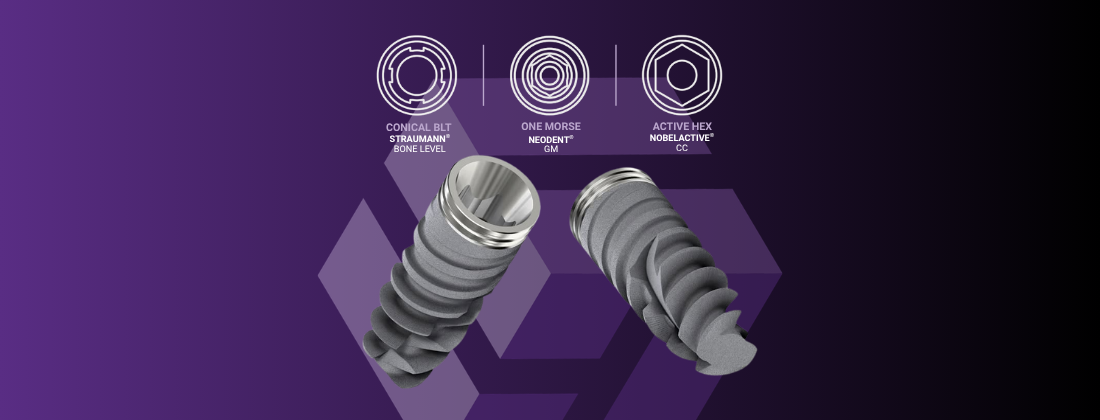
DESS Conical BLT is a bone-level tapered implant system designed for compatibility with the Straumann® Bone Level connection.
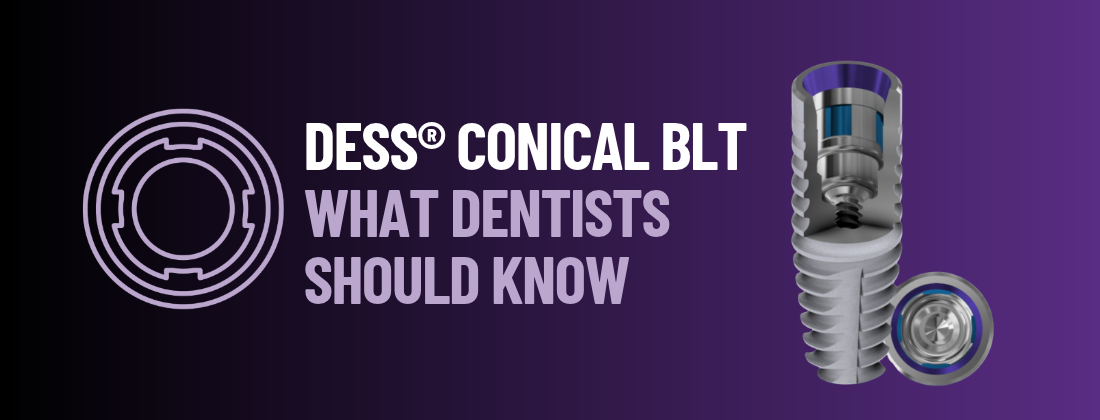
The system features a tapered implant body, an internal 15-degree conical connection with four internal grooves, and OST by DESS® surface treatment.
It's manufactured from cold-worked Grade IV titanium and features a self-cutting apical design intended to support primary stability, including in softer bone conditions.
For clinicians already familiar with Straumann Bone Level, the primary appeal is the ability to evaluate another implant system while maintaining a familiar restorative connection.
How Does DESS Conical BLT Compare with Straumann Bone Level?
The most important similarity is the connection.
DESS Conical BLT is designed around the Straumann Bone Level restorative interface, supporting the use of compatible prosthetic components and established restorative concepts.
However, compatibility shouldn't be confused with identical manufacturing, implant geometry, surface treatment, or clinical documentation.
DESS manufactures Conical BLT as its own implant system, with its own design specifications, instructions for use, and product documentation.
For dentists evaluating the two systems, the relevant questions extend beyond the connection:
- What implant dimensions and platforms are available?
- Which restorative components are compatible?
- What surgical instruments are required?
- How does the implant design support primary stability?
- What clinical evidence, regulatory clearances, and manufacturer support are available?
Understanding these details is essential before incorporating any new implant system into clinical practice.
Can You Use Your Existing Straumann Surgical Kit?
One of the most appealing aspects of DESS Conical BLT is its surgical workflow compatibility.
According to DESS, Conical BLT implants can be placed using a compatible Straumann Bone Level surgical kit and protocol, provided the required DESS implant drivers and adapter are used.
That means clinicians may be able to continue using portions of their existing surgical instrumentation rather than purchasing an entirely new kit.
However, this does not mean every instrument is interchangeable. Clinicians should confirm the exact requirements for the selected implant platform and follow the applicable DESS surgical protocol.
What About Restorative Components?
A compatible restorative connection is particularly valuable because implant treatment continues long after surgery.
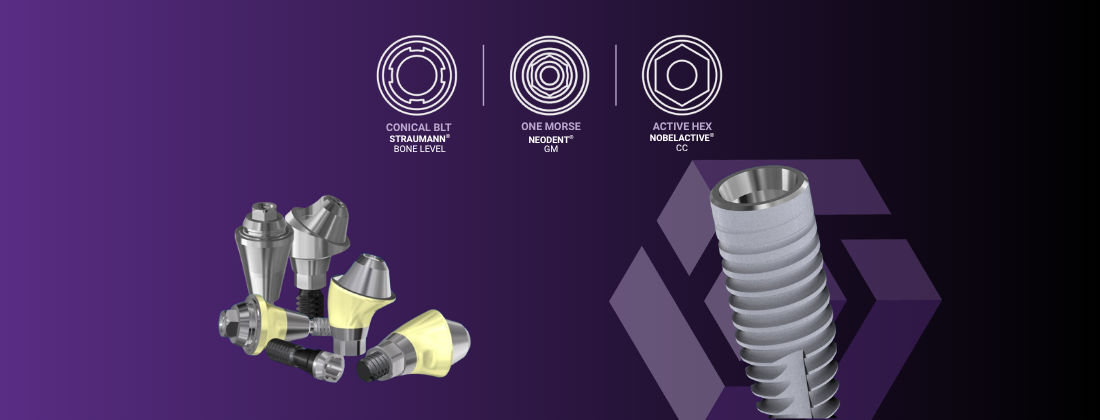
DESS offers a broad restorative portfolio for its Conical BLT system, including healing abutments, scan bodies, Ti bases, temporary components, multi-unit abutments, and MUA+ solutions.
For clinicians performing digitally driven restorative dentistry, these options provide a pathway from implant placement to digital impression and final restoration.
Component compatibility should always be verified at the specific platform and product level.
Is DESS Conical BLT Suitable for Full-Arch Dentistry?
Conical BLT can also be considered within multi-unit and full-arch restorative workflows.
Straight and angled multi-unit abutments allow clinicians to establish an abutment-level restorative platform across implants with different trajectories.
DESS MUA+ adds an anatomical emergence profile and a specialized surface treatment to its full-arch restorative offering.
Combined with digital scanning, photogrammetry, CAD design, and restorative manufacturing, these components can become part of a comprehensive full-arch workflow.
As with any implant system, case selection, implant stability, loading decisions, and restorative design remain clinical considerations.
Why Consider Another Compatible Implant System?
For some practices, introducing a compatible implant system is primarily about expanding purchasing options.
For others, it's about building a more flexible restorative inventory, supporting additional clinical workflows, or evaluating the overall economics of implant treatment.
The advantage of a system such as DESS Conical BLT is that clinicians don't necessarily have to abandon the restorative connection they already know.
That doesn't eliminate the need for training, component verification, or clinical evaluation. But it can make the process of exploring another implant system more approachable.
Explore DESS Conical BLT at Voxel Dental
Voxel Dental now offers DESS Conical BLT alongside Active Hex and ONE MORSE implant systems, plus a growing selection of MUAs, MUA+ and restorative components.
And because Voxel already supports CBCT, intraoral scanning, photogrammetry, 3D printing, milling, and digital design, we can help practices consider the entire implant workflow—not just the implant itself.
Familiar connections. More options for your practice.
Explore DESS Dental Implants at https://voxeldental.com/implants.