
.png?width=45&name=Voxel%20Bios%20(15).png)
When a dental practice chooses an implant system, it isn't choosing just an implant.
That decision can affect surgical instrumentation, restorative components, digital libraries, scan bodies, multi-unit abutments, laboratory workflows and even the team's familiarity with a particular restorative connection. Once a practice becomes comfortable with an implant ecosystem, introducing something different can feel like starting over.
OEM-compatible dental implants offer another option.
Rather than requiring clinicians to move to an entirely unfamiliar connection and workflow, compatible implant systems can be designed around established implant connections already widely used in dentistry.
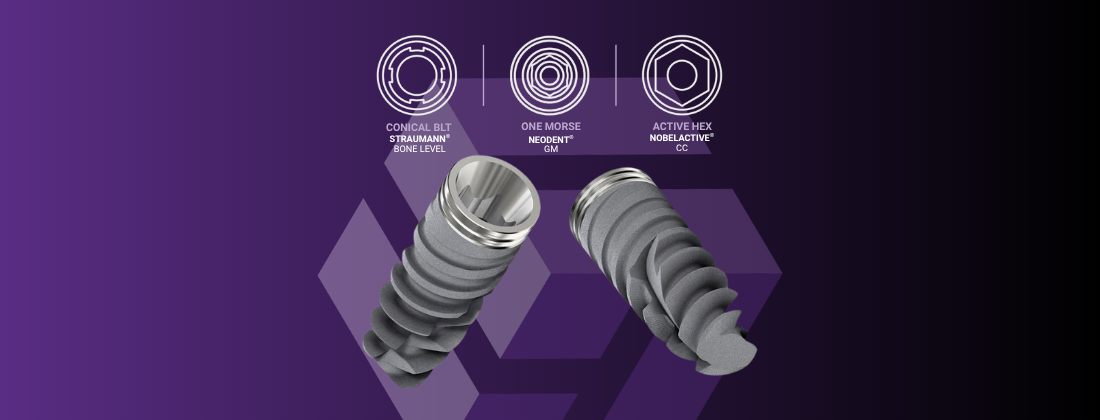
With the introduction of DESS® Dental Implants at Voxel Dental, clinicians now have access to implant systems compatible with Neodent® Grand Morse, NobelActive® CC and Straumann® Bone Level connections.
So, what exactly does "OEM-compatible" mean—and what should you know before choosing a compatible implant system?
What Does OEM-Compatible Mean in Implant Dentistry?
OEM stands for Original Equipment Manufacturer. In implant dentistry, an OEM implant system is the original manufacturer's implant, connection and associated component ecosystem.
An OEM-compatible product is manufactured by another company but designed for compatibility with a particular connection or component interface.
DESS has a long history in compatible implant prosthetics, producing restorative components designed for many established implant systems. With DESS implants, that concept now extends further into the implant workflow.
The key distinction is important:
Compatible does not mean the product is manufactured by the original implant manufacturer.
Instead, it means the product has been engineered for compatibility with the specified implant connection or workflow.
Why Does Implant Connection Compatibility Matter?
The connection at the top of an implant plays a critical role in the restorative workflow.
It determines which restorative components can interface with the implant and influences how the clinician and laboratory approach the case.
For a practice that has spent years working with a particular connection, that familiarity has real value.
The doctor understands the workflow. The restorative team knows the components. The laboratory may already have established digital processes. Staff may recognize the terminology, and the practice may have existing instrumentation and inventory.
A compatible implant system can allow a practice to explore additional implant options without necessarily abandoning all of that familiarity.
Three Familiar Connections from DESS
The DESS implant portfolio available through Voxel includes three systems built around widely established implant connections.
DESS® ONE MORSE
Compatible with Neodent® Grand Morse
ONE MORSE is designed around the Grand Morse connection and provides an option for clinicians familiar with the Neodent® GM ecosystem.
The system supports a broad range of indications and can be incorporated into workflows ranging from individual restorations to multi-unit and full-arch treatment.
DESS® Active Hex
Compatible with NobelActive® CC
Active Hex is designed around the NobelActive® conical connection. Its tapered implant design is engineered to support primary stability while providing a familiar restorative connection for clinicians accustomed to NobelActive® workflows.
The system can support conventional implant treatment as well as immediate and full-arch workflows.
DESS® Conical BLT
Compatible with Straumann® Bone Level
Conical BLT provides a bone-level tapered implant option designed around the Straumann® Bone Level connection.
For practices familiar with Bone Level workflows, Conical BLT provides another implant option while maintaining a familiar approach to the restorative connection.
Compatible Doesn't Mean Everything Is Interchangeable
This is one of the most important distinctions when evaluating any OEM-compatible implant system.
Connection compatibility should not be interpreted to mean that every implant, instrument or component from two systems is automatically interchangeable.
Compatibility can vary by product, procedure and component. Implant drivers, surgical instruments, prosthetic components and other parts of the workflow should always be selected according to the manufacturer's indications and instructions for use.
That's why practices should look beyond a simple "compatible with" label.
Before adopting a system, understand exactly which components are compatible, which instruments are required and how the manufacturer intends the system to be used.
What About Multi-Unit Abutments?
For practices performing full-arch dentistry, implant compatibility is only part of the equation.
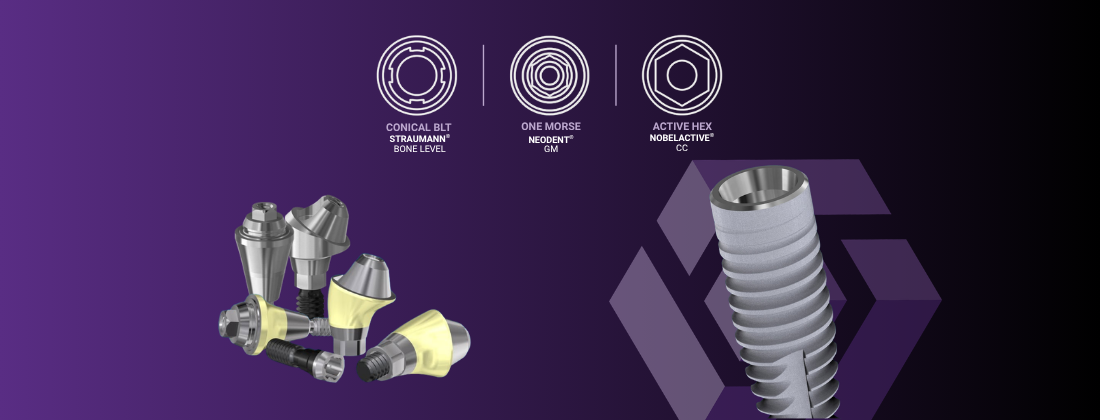
Multi-unit abutments (MUAs) create a restorative platform above the implant and can help clinicians manage differences in implant depth and trajectory across the arch.
Straight MUAs can be used when implant trajectory is already favorable, while angled MUAs can help redirect the restorative platform when implants are intentionally or necessarily tilted.
DESS also offers MUA+, an enhanced multi-unit solution featuring an anatomical emergence profile and multiple restorative configurations.
This allows the conversation around compatibility to extend beyond the implant itself and into the complete full-arch restorative workflow.
Think Beyond the Implant
This is particularly important as implant dentistry becomes increasingly digital.
A modern implant or full-arch workflow might involve:
CBCT → treatment planning → intraoral scanning → guided surgery → implant placement → MUAs → photogrammetry → digital design → provisional restoration → definitive restoration
Every transition between those steps matters.
The question therefore shouldn't only be, "Which implant do I want to place?"
It should also be:
"How does this implant fit into the workflow I want to build?"
That includes the restorative connection, available components, digital libraries, scanning workflow, provisionalization process and how the final restoration will be produced.
Are OEM-Compatible Dental Implants Right for Your Practice?
For some clinicians, staying entirely within a single manufacturer's ecosystem makes sense. For others, having access to compatible implant and restorative options can provide valuable flexibility.
The important thing is understanding exactly what you're adopting.
Consider the implant connection you're already comfortable with, the types of cases you perform, the components you use most often and where you want your digital workflow to go next.
For practices already working with Neodent® Grand Morse, NobelActive® CC or Straumann® Bone Level, the DESS implant lineup provides three options worth exploring.
And because Voxel works across imaging, scanning, implant dentistry, photogrammetry, 3D printing, milling and digital design, our team can help you look beyond the individual implant and consider how the entire workflow fits together.
Explore DESS® Dental Implants
Discover ONE MORSE, Active Hex and Conical BLT implants, along with MUAs, MUA+ and restorative solutions for your implant workflow.
Explore DESS Dental Implants at Voxel Dental

.png?width=45&name=Voxel%20Bios%20(1).png)
.png)